(Adapted from a sermon on Exodus 20:3-4 God commands his people not to create or worship images of what we think he might be like, and he commands us to become living images shaped by his word to us; Preached September 7, 2025 at Campton Baptist Church)
Zach Collier
Pastor

Nobody needs a little Jesus.
Imagine this. You are standing in line in the grocery store in your hometown. Checking out in front of you is a lady older than you with her purchases already bagged and loaded in her cart. Just before she departs, she fishes in her purse and then hands you and the cashier little plastic statues of a bearded man with long hair in a white robe and a bright sash across his chest and tells you both, “Everyone needs a little Jesus.” She then smiles and quietly walks away.
Are you reading this as a Christian or a skeptic? Perhaps you are an atheist or ascribe to some other religion entirely. That may determine how you respond. But most of us aren’t going to throw it away until the dear lady clears the door with her cargo. Most people reading this won’t be terribly offended. It might shock you or it might bewilder you, but you probably aren’t going to get angry. Personally, I would feel a mild sense of disgust until I could throw it away. I should at that point say to the clerk, quietly and without animosity to the well-intentioned customer who preceded me, “Nobody needs a little Jesus.” Here’s why.
Exodus 20:3-4
“You shall not make for yourself a carved image, or any likeness of anything that is in heaven above, or that is in the earth beneath, or that is in the water under the earth. You shall not bow down to them or serve them, for I the LORD your God am a jealous God, visiting the iniquity of the fathers on the children to the third and the fourth generation of those who hate me, but showing steadfast love to thousands of those who love me and keep my commandments.
When God spoke this commandment, he had just led his people out of Egypt by producing amazing visible signs of his presence.
God appeared to Moses in a burning bush. He sent forth plagues upon the land of Egypt. He parted the Red Sea. He led the people by a pillar of cloud by day and a pillar of fire by night. He gave them a physical tabernacle decorated with shapes and structured in ways that represented the Garden of Eden where he first dwelt with man before Adam and Eve sinned against him. He gave them manna from heaven to eat and water from bare rock to drink in the desert. Yet even those who were under all these signs quickly rebelled against his commandments, going so far as to create an image to represent their idea of God at the foot of his holy mountain. God will not abide peaceably with those who profess to worship him one day or one moment and then continue in unrepentant sin the next.
Such behavior is a sign that a people are not worshiping the true and living God who has revealed himself in Scripture, but are instead worshiping a god of their own imaginations. Imagining or thinking about God is a dangerous business.
The second commandment was given to protect the people of God from bringing judgement upon themselves by wrongly imagining or thinking about God. We are made in the image and after the likeness of the one true and living God.
Genesis 1:26-27
Then God said, “Let us make man in our image, after our likeness. And let them have dominion over the fish of the sea and over the birds of the heavens and over the livestock and over all the earth and over every creeping thing that creeps on the earth.” So God created man in his own image, in the image of God he created him; male and female he created them.
This is a foundational truth of the Bible. The second commandment prohibits us from making any images or likeness of anything in heaven above, or that is earth beneath or that is the waters under the earth that we could in any sense be tempted to worship or place in value equal to or above or even in companionship with the one true and living God who made us to bear his image and likeness apart from and above all his other creatures. Not even the angels are made to image God the way that men and women are. So there is a real danger in drawing, painting, printing, carving, casting, molding, enacting, or electronically generating a representation of what we or other people think about how God should look.
The danger of this is only heightened for us on whom the end of the ages has come because now God the Son has become the Man Christ Jesus. There were occasions in the days of Abraham, Moses, and the saints of old when God appeared as man, but now he is one.
There have been occasions in history when persons in the Old and New Testament have forgotten to keep this commandment to their peril.
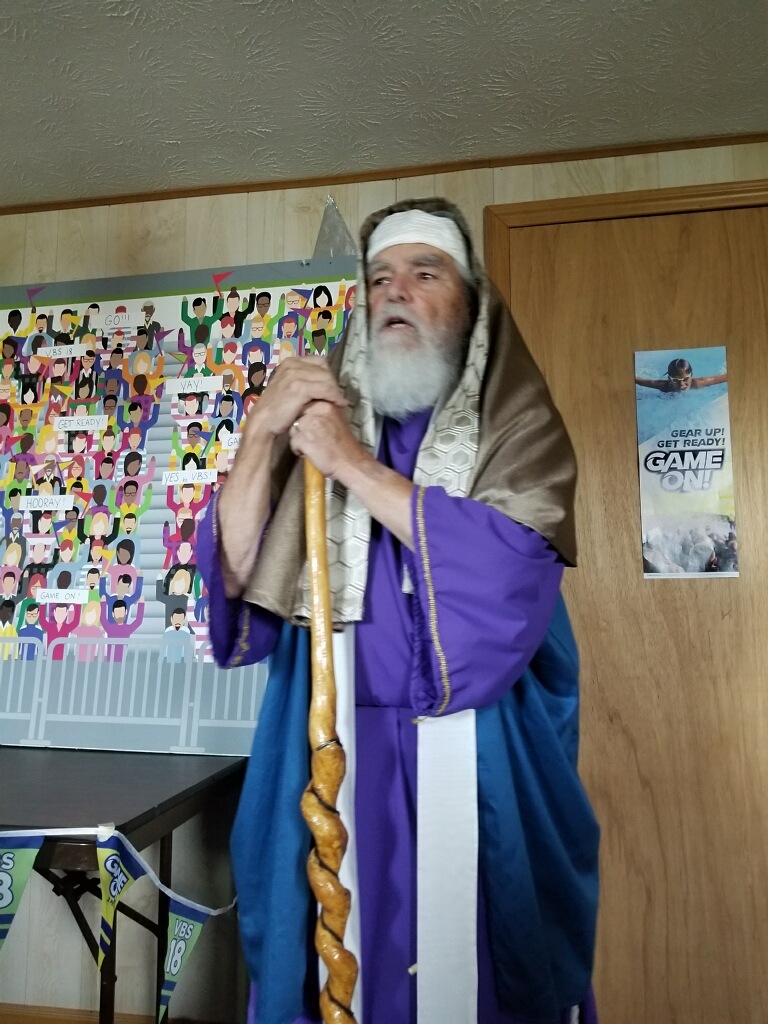
Just because we can look back at history and look around our world and see people creating images of how they imagine Jesus to look and filling their places of worship with images of how they even imagine God the Father doesn’t mean that the practice is good. The golden calves of Aaron and Jeroboam were also pleasing to look at for the people. We might look at paintings or sculptures that tried to represent Jesus as great works of art, but their placement in places of Christian worship is a clear violation of God’s own commandment. The creation of these likenesses as representations of God are based upon the sinful imaginations of the artists who first created them. Even the most devout and well-intentioned disciple who tries to visually represent Jesus will just be representing a Jesus of his or her own imagination. How much worse is it to create such images in an atmosphere of theater styled as Christian worship or discipleship and then auction them off?
In our modern era, many people have hailed cinematic representations or movies about Jesus as a great way to teach people about him. This too is problematic because we can be tempted to replace the Jesus who really lived and died and rose again with the face and mannerisms of an actor. We can be tempted to substitute the moving picture version of Jesus even as we read and try to meditate upon the Gospels. Even thinking about Jesus is made dangerous because of all the competing images our mind can take the place of the real Jesus we read about in the Bible. Thinking about Jesus means we are thinking about God the Son who became human and remains humans as our great high priest. Jesus’s human body has a definite shape and his human body is in heaven until he returns. We should not try to create an image of him to compete with or add to what he has revealed in the Bible.
The danger of replacing the real God with images of our own making or made for us by others is that we will provoke God to wrath.
Many people in cultural Christianity have tried to forget about the need for God’s wrath, but even a cursory reading of the Bible, the Old and New Testaments reveals that his wrath is a necessity of who he is. A god without wrath is a god who cannot punish or destroy sin in Hell. A god without wrath is a god who is just a victim of human cruelty when Jesus was dying on the cross. Such a god is not a person anyone should worship or will worship for very long. Exodus 20 teaches us of a very different God than the one esteemed by much of cultural Christianity. The God who revealed himself at Sinai, the same LORD who created the heavens and the earth and who created man in his own image and after his likeness, also revealed himself as the Man Christ Jesus. Jesus Christ the Son has shown us God the Father and they have together given us God the Holy Spirit to abide within us who are born of him. This same Jesus died as a sinless man for sinful men and women. He bore the wrath of God we deserve in his body on the cross to remove from us and for us the eternal punishment that we earn by sinning against God.
Idolatry is a capital offense in the Bible, in both the Old and New Testament. In terms of temporal consequence, even within the church, idolatry is punishable by death. This may come as a shock to you. In Old Testament Israel, idolatry was commanded to be punished by the people of Israel taking up stones and throwing them at the idolater until he or she was dead. That is not the same way we are told to deal with idolatry in the New Testament church, but the penalty remains death for those who would try to follow Jesus and worship idols. Paul warned the Corinthian church.
1 Corinthians 10:1-21
For I do not want you to be unaware, brothers, that our fathers were all under the cloud, and all passed through the sea, and all were baptized into Moses in the cloud and in the sea, and all ate the same spiritual food, and all drank the same spiritual drink. For they drank from the spiritual Rock that followed them, and the Rock was Christ. Nevertheless, with most of them God was not pleased, for they were overthrown in the wilderness. Now these things took place as examples for us, that we might not desire evil as they did. Do not be idolaters as some of them were; as it is written, “The people sat down to eat and drink and rose up to play.” We must not indulge in sexual immorality as some of them did, and twenty-three thousand fell in a single day. We must not put Christ to the test, as some of them did and were destroyed by serpents, nor grumble, as some of them did and were destroyed by the Destroyer. Now these things happened to them as an example, but they were written down for our instruction, on whom the end of the ages has come. Therefore let anyone who thinks that he stands take heed lest he fall. No temptation has overtaken you that is not common to man. God is faithful, and he will not let you be tempted beyond your ability, but with the temptation he will also provide the way of escape, that you may be able to endure it. Therefore, my beloved, flee from idolatry. I speak as to sensible people; judge for yourselves what I say. The cup of blessing that we bless, is it not a participation in the blood of Christ? The bread that we break, is it not a participation in the body of Christ? Because there is one bread, we who are many are one body, for we all partake of the one bread. Consider the people of Israel: are not those who eat the sacrifices participants in the altar? What do I imply then? That food offered to idols is anything, or that an idol is anything? No, I imply that what pagans sacrifice they offer to demons and not to God. I do not want you to be participants with demons. You cannot drink the cup of the Lord and the cup of demons. You cannot partake of the table of the Lord and the table of demons. Shall we provoke the Lord to jealousy? Are we stronger than he?
Paul had already warned the church against eating meat that might have been offered to idols in pagan temples because many of the new converts to Christianity there in Corinth had once been worshipers in those temples. They were weak in their consciences and might wrongly think that it was okay to worship Jesus and still participate in idolatry. This would destroy them. God will not let someone who worships idols live at peace among his New Covenant people. Our way of addressing this sin is to call each other to repent as needed, even removing them from the membership of the church and treating them as an unbeliever if unrepentance persists. Left untreated by this prescription in Jesus’s body, members who engage in idolatry will wither and die and they may fester and infect the rest of the body with the gangrene of idolatry.
Jesus himself, in his Revelation to John, warned the church in Pergamum and so warns us, “you have some there who hold the teaching of Balaam, who taught Balak to put a stumbling block before the sons of Israel, so that they might eat food sacrificed to idols and practice sexual immorality. … Therefore repent. If not, I will come to you soon and war against them with the sword of my mouth.” (Revelation 2:14, 16)
We should firstly try to guard ourselves and then be alert to help correct each other when we see a potential temptation toward idolatry.
If you really are a Christian and you manage to convince yourself in your mind that idolatry or any other sin is permissible, then God will correct you, painfully as needed. He disciplines those he loves. Such grievous sinning can eventually become fatal for a brother or sister for whom Christ died. While they might still be saved from the eternal consequence of sin, God will not ignore the temporal presence of sin in the life of someone who is truly in Christ. As one Puritan author, John Owen observed, “Be killing sin, or sin will be killing you.” This is why we should be always on alert to potential temptations and snares, not just for ourselves, but also for one another as concerns such terrible sins as idolatry.
The LORD gave these commandments to his people to teach them to better show the world who he was by living in a way that displayed his holy character.
Remember that in the beginning God created humans in his image to display his glory and dominion above all other creatures in the skies or on the earth or in the waters. When Adam sinned, as our federal representative, that image was marred, but it was not destroyed. So the law, including this second commandment was given to oppose sin and teach the people why it was wrong. We are supposed to have dominion over God’s creation, not worship it.
God gave these rules so that people who live according to them will better display his image. In Christ, we do not live under this law as though under a curse, but we establish this law as the Spirit of the risen Christ lives in us. He extends his rule and dominion as we live as his disciples and make more disciples who observe all he has commanded us. This is God’s master plan of evangelism; to make disciples who make disciples of Jesus until his kingdom grows to fill all the earth with his regenerated image-bearers from every tribe and every language on this earth.
Consider how the first disciples of Jesus taught people about him. These were the men who walked with Jesus. They reclined with him at meals. They saw his miracles. They saw him dead. They saw him alive again after he was raised. Yet they made no visible representations of him. It was hundreds of years before people began to start making images of how they wanted Jesus to look. That was long enough for those pagan tendencies to creep back into the church under the guise of teaching people who couldn’t read or understand the homilies or Scripture readings that weren’t in their native languages. Instead of learning those languages and teaching the people about Jesus in those languages, the leaders resorted to symbols and then symbols gave way to statues and paintings and stained glass windows.
But that is not how Jesus commanded for us to make disciples. His disciples; his apostles under his authority and those writing in that generation under their authority gave us written words, just like God gave Israel written words at Sinai so they could learn and teach the commandments to their children. In that generation, the disciples of Jesus focused on reproducing his teachings, by teaching his followers the Scriptures, especially the Old Testament, according to the way he taught them. They focused on making disciples who would bear his image faithfully before the watching world. They began the work of filling the whole earth with these renewed image-bearers.
Consider even how Jesus appeared to two disciples in the afternoon and evening after the resurrection. Walking along the road to Emmaus, Jesus met two of them, and they did not recognize him for who he was from his appearance. He taught them from the Scriptures of Moses and the Prophets why he had to suffer and die and be raised again. Only when he was sitting down to eat with them and broke the bread for the meal did they see it was him. Many thoughts compete on how this was possible, but I think the message we are meant to understand includes that we should not focus on how Jesus looked, but on what Jesus has done. We should focus on the testimony of the Scriptures to know Jesus and to make him known. We also make him known by the fellowship or communion of the church, represented every week as we break the bread together that represents his body broken for us.
If we want to create real images of who God is in Christ Jesus, then the way we do that is by fulfilling his great commission.
The world doesn’t need us to produce a more artistic or culturally relevant version of Jesus that appeals to their felt needs. The world doesn’t need little plastic Jesus idols to clutter cars or carry in pockets and confuse or conflate with the real Jesus. The world needs disciples of Jesus who grow his church by making more disciples of Jesus who all make his gospel visible in their communities. This is how the first church grew to fill all of Judea and Samaria and went on to turn the whole Roman world on its head. This is how we make disciples of all nations.
That is what Campton, Kentucky needs right now more than it needs anything else. It needs disciples of Jesus more than we need more teachers or bus drivers or doctors and nurses. It needs disciples of Jesus more than it needs more employment, more industry, or better social programs. As disciples of Jesus, we should be concerned with those things insofar as they make our community better. The church and our members need to be present in the community, but if we want to show Jesus to people, then there is only one valid way for us to do it. Jesus’s human body is in heaven. If that’s the first glimpse of Jesus they see, it’s too late for them. They need to see him in the spiritual body that he left here on earth. They need to see him in the life of his church, including this one. They need to become his disciples. That is our primary mission as we seek to fill the whole earth with those who bear the renewed image of God.
I wouldn’t have time to say all this while the cashier was scanning my items at the checkout. But what I would have time to say and what I should say after “Nobody needs a little Jesus,” is that we all need the real Jesus. “We need the real Jesus who is the Son of God who became a man so that he could live a perfect life and then die for our sins and be raised again. We need the real Jesus who is alive and is enthroned in heaven interceding for the people he loves and who will one day return to judge the world in righteousness.” I should ask the cashier, and I ask you, “Do you believe that is who Jesus is? Do you want to? Would you rather have the real Jesus who will keep you for eternity or just a little plastic Jesus to keep in your pocket? I hope you get to know the real Jesus.”
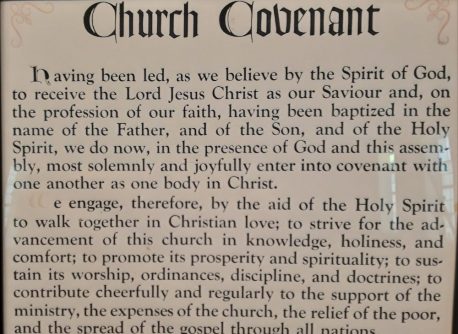

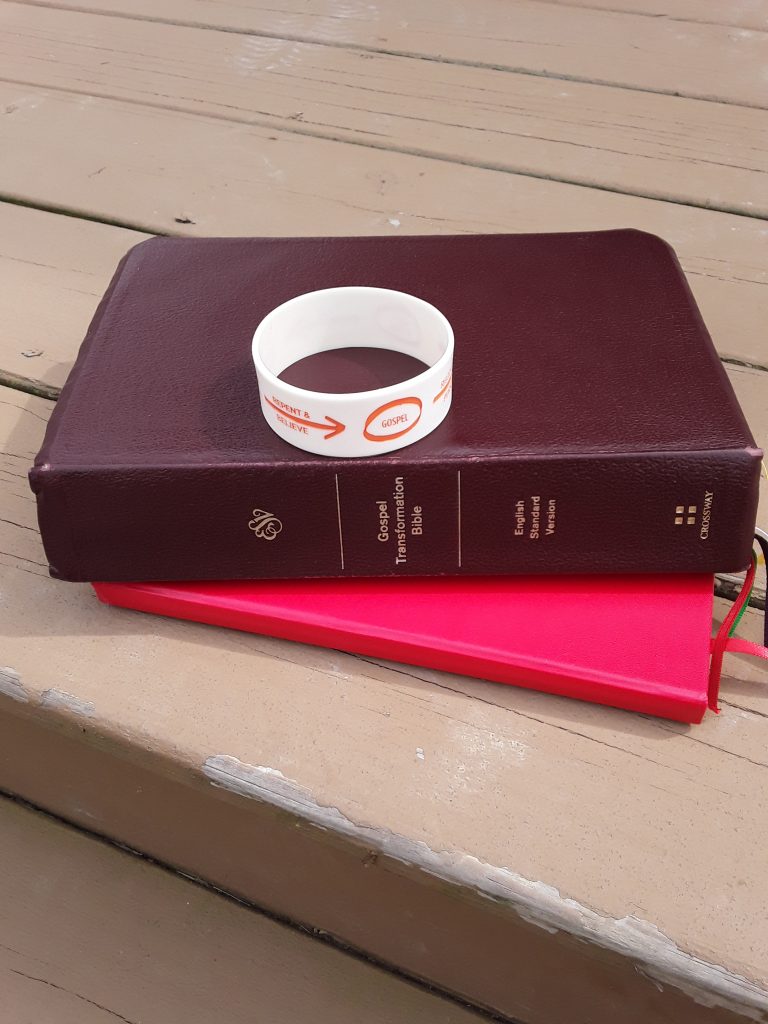 There are many tools that can help us do the work of an evangelist. We are called to do the work, not just possess the items and knowledge. With the resources we have, there is no excuse for us to ignore our calling.